
Resurrecting Virality
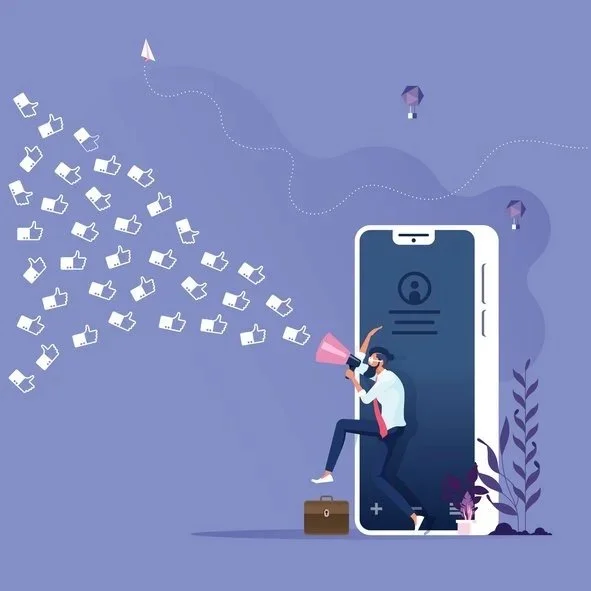
There was a time when a new Taylor Swift release felt almost universally inescapable. Her music video for “Shake It Off” amassed more than 40 million views within its first 24 hours, becoming a cultural moment that extended far beyond her core fanbase. By contrast, the video for her more recent hit “Opalite” has yet to reach even half that number months after its release. The difference is not that Swift has become less popular. If anything, she is more successful than ever. Rather, her audience has become increasingly segmented, spread across platforms, algorithms, and niche online communities in ways that make even massively successful releases feel less universally shared.
There is no longer a guarantee of universal virality. Audiences split at algorithmic forked paths, and the idea of a single cultural moment capturing everyone’s attention at once feels increasingly rarer. Not because culture moves more slowly, but because distribution has fundamentally changed.
Platforms now prioritize personalized engagement, serving users content based on behavior, interests, and predicted response. Beyond that, each platform caters to different tastes entirely. There are not only endless content subgenres to fall into, but also an expanding ecosystem of apps and saturation of creators through which those interests are further filtered into smaller cohorts.
In the earlier era of the internet, large audiences were far more likely to encounter the same content through shared homepages, trending pages, and mass-media amplification. There was a stronger sense of a centralized public square online. Today, attention is disturbed by algorithms optimized for individual relevance and retention.
The internet still produces breakout hits, like the Labubu craze of ’25, but as content ecosystems become increasingly tailored, the threshold for creating a truly global moment grows higher and higher.
So what has become the real driver for massive moments? In many ways, it’s a return to the original catalyst for virality that predates the internet: word of mouth. After years of relying on algorithms, feeds, and frictionless sharing, real human communication is once again what cuts through fragmentation. It’s no longer enough for people to simply like, share, or passively consume something at scale. Cultural momentum now depends on direct recommendation and conversation.
Once people begin actively talking about something, that’s when it breaks out of its niche and into the mainstream. Horror is a perfect example. Long considered a cult genre with a dedicated but limited audience, horror has increasingly climbed into mainstream “must-watch” territory through word-of-mouth momentum. Recent box office hit Obsession earned back more than 100 times its production budget largely because audiences haven’t been able to stop talking about it.
For brands, publishers, and marketers, this changes the meaning of “viral.” A piece of content can generate enormous traction within a specific community while remaining almost entirely invisible outside of it. Because of the increasingly segmented nature of today’s internet, there is no guarantee the masses will ever even see what is being put out, but loyalists likely will, and the power those loyalists hold to rapidly attract or deter audiences through conversation alone is where influence truly lives.
The most valuable insights often come from the people who care the most: the superfans, loyalists, and deeply engaged consumers who understand not only what resonates within a category, but why it resonates.
That makes respondent recruitment for research more important than ever. Ensuring that research participants are genuinely invested in the ideas being discussed allow brands to optimize for authentic enthusiasm first. These audiences are often the earliest adopters, the loudest advocates, and the consumers most likely to generate the kind of conversation-driven momentum that modern virality depends on. In many ways, they act as cultural accelerants.
When something strongly connects with a core audience, those fans begin translating their excitement outward through recommendation, discussion, reposting, theorizing, and real-world conversation. Their fandom becomes the bridge between niche engagement and broader cultural awareness.
At the same time, incorporating a wider range of perspectives remains equally important. Diverse viewpoints help challenge the increasingly rigid segmentation created by algorithmic media environments. They expose blind spots, surface unexpected reactions, and create opportunities for content or products to travel beyond their intended niche.
The strongest brands, media content, and products should not simply be optimized for digital impressions but also for emotional investment strong enough to escape the feed and enter real-world conversation.
The current (and evolving) online world did not eliminate cultural phenomena, it decentralized them, and perhaps that is what makes modern virality more difficult, but also more meaningful. Not everyone has to see it or like it anymore – just the right people.